AAUP Ohio Conference

American Association of University Professors

  • About
    • Who We Are
    • Board of Trustees
    • Staff
    • Committees
    • Events
      • Annual Meeting
      • Board Meetings
  • Membership
    • Chapters & Presidents
    • Join AAUP
  • Government Relations
    • Current Legislation
    • Find Your Legislators
    • SB 1 Toolkit
  • News & Blog
  • Donate

Mar 24 2017

Tenure elimination bill to be introduced; McNay testifies to subcommittee

Tenure Would Be Eliminated by New Bill

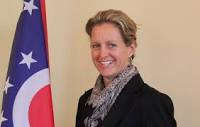
It has come to our attention that Rep. Kristina Roegner (R-Hudson) plans to introduce a bill that would eliminate tenure for new faculty at public institutions of higher education in Ohio.

Rep. Kristina Roegner

In the co-sponsor request being circulated by Rep. Roegner, she says that the  “one-size-fits-all tenure system is long outdated and is adding to the costs of higher education for universities and is being passed on to students.” 
The legislation, she indicates, will apply only to new hires at public institutions, and faculty that already have tenure or are tenure-track will be grandfathered in to the current system. 

While we see this as a politically-motivated attack rather than a useful piece of legislation rooted in facts or understanding of higher education, it presents us with an opportunity to defend and promote tenure to the General Assembly. It gives us the chance to discuss what tenure is and isn’t, how it is critical in protecting academic freedom, and how attacking tenure will drive away quality faculty from Ohio. 

This bill has yet to be formally introduced. When it is, we will inform you of the bill number and what you can do to help defeat it. 

McNay Testifies to Higher Ed Subcommittee

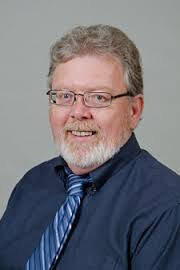
Yesterday, OCAAUP President John McNay delivered testimony to the House Finance Subcommittee on Higher Education regarding House Bill 49, the state budget bill.

In his testimony, McNay emphasized that the academic missions of our colleges and universities should be the focus of state and institutional decision-making. He cautioned legislators on the “less education is better model” that College 

John McNay

Credit Plus promises, as well as the dangers of not giving students a full liberal arts education in an ever-changing economy.
President McNay also criticized the new performance-based funding formula, citing a Columbia University study, which found that Ohio universities were moving funding from need-based students to high-achieving students who are more likely to pass courses and graduate and thus generate financial return for institutions.

Moreover, he addressed the budget language related to establishing a commercialization pathway to tenure. He told the subcommittee members that OCAAUP is not opposed to establishing another path to tenure, but that the commercialization research in which public institution faculty are engaged must be peer-reviewed and serve the public interest. 

He expressed academic freedom concerns about the textbook proposal, and subcommittee members Rep. Duffey (R-Worthington) and Rep. Anielski (R-Walton Hills) asked him several questions about textbook costs and faculty selection of textbooks. 

Rep. Ramos (D-Lorain) asked McNay if so much emphasis on textbooks, and so little emphasis on increased state aid, would help the state achieve its goal of 65% of Ohioans with a degree or certificate by 2025. McNay responded that students often do not finish their college education due to financial reasons, and that increased state support would help more students earn degrees. 

Ramos also asked about adjunct faculty, noting a correlation between universities that have lower numbers of adjuncts and higher numbers of graduates. President McNay commented that part-time faculty are professionals who get paid very little and have little to no institutional support. 

He said that it is difficult for adjuncts who often have to piece together a living by teaching at multiple institutions to hold office hours and have other out-of-classroom interaction with students that full-time faculty do.

He pointed to the section in OCAAUP’s recent report, which shows that institutions could afford to hire more full-time faculty if they would cut costs in non-academic areas and redirect that money toward instruction.
The subcommittee chair, Rep. Perales (R-Beavercreek), thanked McNay for his testimony, saying that he always brings a valuable perspective to the committee.

Written by admin · Categorized: Uncategorized

Feb 22 2017

Two reports you’ll want to see

OCAAUP’s 2017 Ohio Higher Education Report

In 2015, for the first time ever, OCAAUP produced an Ohio higher education report entitled “The Real Problems Deserve Real Solutions.” The purpose of the report was to shed light on the true cost-drivers in higher education.

Too often, faculty are scapegoated for institutional financial difficulties, and we wanted to point lawmakers and the public to the real problems we face and how we can solve them.

In keeping with that goal, especially in the face of short-sighted state and institutional policies, we produced another report this year called “Education First.” This report urges lawmakers and institutions to make the educational missions of our colleges and universities the focus of decision-making. 

Unfortunately, over the last several years, we have seen policies and programs such as performance-based funding and College Credit Plus which threaten educational quality. In addition, we continue to see institutions spend scarce resources on things peripheral to the academic mission, such as grandiose construction projects and athletics.

The report is being shared with state legislators and higher education reporters throughout the state. In doing so, we hope to bring attention to these issues and perspectives so that Ohio higher education can be put on the right path. 

This project was done completely in house by OCAAUP and is the product of months of research and writing. A special thanks to those who had a hand in it: John McNay, Sara Kilpatrick, Patty Goedl, Marty Kich, Steve Mockabee, and members of the OCAAUP Board.

Report Reveals Endowment Hedge Fund Investments

A new Hedge Clippers report shows that Ohio universities are making risky, expensive hedge fund investments.

Hedge Clippers is a group that works to expose public investments in hedge funds, which often charge higher fees and produce lower returns than index funds. Hedge fund billionaires frequently use their profits to fund anti-worker and anti-public education initiatives. Hedge Clippers brings attention to these issues in order to encourage public entities to divest from hedge funds.   

Their latest report on Ohio university endowments revealed these key findings:

  • Twelve Ohio colleges and universities paid about $425 million dollars in fees to hedge fund managers since the Great Recession — enough to provide over 8,000 full in-state scholarships at Ohio public universities per year. 
  • Eight Ohio public universities paid an estimated $238 million in hedge fund fees; the four large Ohio private universities included in our analysis paid nearly as much, with an estimated $187 million in fees to hedge fund managers since 2009. 
  • These fees are in no way justified by returns. According to estimates, these twelve universities on average paid an unbelievable 65 cents in fees to hedge fund managers for every dollar of net return to the endowment fund from 2009-2015. 
  • Hedge funds operate without transparency and without accountability. Hedge fund managers do not have to disclose to universities how much they are collecting in fees, and universities are not obliged to report to the public how much they have invested in hedge funds, which hedge funds they are invested in, and how these hedge funds have performed. 
  • High fees rip off Ohio taxpayers and colleges while hurting Ohio communities. Hedge fund managers are using the fortunes they’ve grown through exorbitant fees to fund politicians and initiatives that put Ohio communities at risk.

Take a look to see if your institution made the report.

Written by admin · Categorized: Uncategorized

Feb 17 2017

Bill would create tenured faculty workload mandate; We fight for your pension

HB 66 Would Create Tenured Faculty Workload Mandate

Rep. Ron Young (R-Leroy Twp.) has introduced House Bill 66, legislation that would create a state-imposed workload mandate for tenured faculty.

The legislation calls upon boards of trustees at each public college and university to review and update workload policies. Those updated policies would have to include a provision that tenured faculty must teach “not less than three semester hours, or the equivalent, of undergraduate courses per semester.”

The bill would not impact current collective bargaining agreements, but explicitly lays out that it would prevail over any future collective bargaining agreements, should the bill be passed and enacted.

Gov. Kasich has tried to impose workload mandates in previous budget bills, but the legislature was quick to remove those provisions. Generally speaking, colleges and universities have been opposed to these provisions because they do not want the General Assembly to get in the business of micromanaging institutions.

Right now, we do not know where the Inter-University Council or Ohio Association of Community Colleges stand on the bill. We do hope that we can be united with those employer groups, as well as other organizations, to combat this misguided legislation. 

The bill merely has been introduced and has not yet been referred to committee, although we expect that it will be referred to the new House Higher Education & Workforce Development Committee. Should the bill be scheduled for hearings, we will provide testimony on the myriad of problems that this legislation would present in tinkering with workload. 

As always, we will try to help legislators understand that these are not the real issues facing public higher education.

OCAAUP Fights for Your Pension, Read Rudy’s Letter

One of the critical functions that the Ohio Conference performs for you, our members, is participating in coalitions that advance collective interests. 
With regard to public college and university faculty in the State Teachers Retirement System (STRS), we belong to a coalition called Healthcare and Pension Advocates of STRS, or what we refer to simply as “HPA.”

HPA is a coalition of active educator groups like ours, retired educator organizations, as well as associations that represent the K-12 and higher education employers. HPA originally began to save the retiree healthcare program, but as pension issues sprouted, began to take on a wider set of issues.

AAUP president Rudy Fichtenbaum, a member from Wright State University, and OCAAUP executive director Sara Kilpatrick represent faculty as part of HPA. This allows us to voice concerns to the STRS staff about the direction of the retirement system. We balance the interests of those in the Defined Benefit (DB) system with those who have chosen the Alternative Retirement Plan (ARP).

In 2012, a set of reforms were made to STRS in order to shore up funding of the DB system to meet legislative demands. These reforms included raising the mitigating rate for those in the ARP, as well as increasing contributions from DB members by 4%. 

Most recently, the STRS Board and staff have undergone the legislatively-mandated five-year actuarial study. The study has revealed that market returns over the last five years have not been as high as were anticipated. The consultants hired by the system have recommended a new discount rate (the expected rate of return) of not higher than 7.25% (the current rate is 7.75%). The STRS staff are recommending a more conservative 7%.

Lowering the discount rate means that the system’s liabilities will increase drastically. This then creates pressure on the system to make additional reforms in order to lower the liability. The STRS staff is recommending to the Board that they should eliminate the cost of living adjustment (COLA) for retirees.

Rudy Fichtenbaum taught econometrics for 35 years. He keenly understands economic forecasting and believes that STRS is making unnecessary decisions that will hurt retirees. Please take a few moments to read the letter that he sent to our colleagues in HPA.

Like the STRS Board and staff, we want to ensure the preservation of the Defined Benefit plan, but we firmly believe that we cannot keep cutting, cutting, cutting away at active educators and retirees alike if the DB is going to have any real value to members. And please know that we will continue fighting for all public college and university faculty to be treated fairly by STRS. 

Written by admin · Categorized: Uncategorized

Feb 15 2017

More of the Same in Kasich’s Latest Budget

On Monday, January 30, Gov. Kasich unveiled the highlights of his executive biennial state budget, which covers Fiscal Years 2018-19. There were no major surprises, as the components followed suit with what the governor has pushed for in previous budgets

Tax Cuts & Shifts 

Kasich’s executive budget continues his focus on reducing the personal income tax while raising the sales tax and broadening the services tax. His plan would increase the severance taxes on oil and gas, as well as hike the “sin taxes” on cigarettes and alcohol. Reducing progressive taxes and enhancing regressive taxes has the effect of disproportionately rewarding the wealthiest Ohioans and hurting the poorest Ohioans. Unfortunately, these are the same tax policies that have led to revenue shortfalls — the shortfalls that prompted the governor to proclaim that the state is on the verge of recession. There is little evidence to suggest that Ohio could be headed to recession, but there is much evidence to suggest that income tax cuts produce less revenue. Ohio has a revenue problem, not a recession problem.

Higher Education Freezes and Funding

In step with his previous budgets, Kasich has called for tuition and fee freezes at institutions of higher education for the next two years. His budget would increase overall higher education funding by 1% in FY 2018 and then an additional 1.8% in FY 2019. 

State Share of Instruction (SSI)

According to the administration’s budget recommendations, State Share of Instruction (SSI) — the primary means of financial support to colleges and universities — will increase 1% in each fiscal year. In pure dollar amounts, not adjusting for inflation, this will put SSI slightly above where it was under Gov. Strickland’s final budget in FY 2011. While we commend the slight increases in funding, we still have a long way to go in order to adequately support our institutions to ensure that quality instruction can be maintained while costs for students are contained.

Ohio College Opportunity Grant (OCOG)

The budget recommendations also include Ohio College Opportunity Grant (OCOG) increases: 3.1% in FY 2018 and an additional 2% in FY 2019. This grant helps low-income students attend any institution of higher education in the state, and we applaud the Kasich administration’s continued restoration of funding to this grant.  

Other Higher Ed Policy in the Executive Budget

Kasich’s budget would require public institutions of higher education to pay for students’ textbooks, allowing the institutions to charge students only up to $300 to defray those costs. We do not yet know how much this unfunded mandate would cost institutions, but expect that the Inter-University Council and Ohio Association of Community Colleges will be providing estimates and addressing the issue. 

Additionally, the governor would like to push more competency-based education (including giving Western Governor’s University status as an Ohio institution), authorize community colleges to offer more bachelor’s degrees, and allow high school students to get college credit for work experience. He also has proposed a scholarship fund to assist drop-outs with returning to college and completing their degree. 

Next Steps

The budget process has just begun. Soon we will see the Ohio House of Representatives produce a formal bill containing the governor’s proposals. The budget bill will go through numerous hearings in the House and Senate Finance Committees and Subcommittees before the final version is approved by the governor at the end of June. 

The Ohio Conference AAUP will be engaging fully in budget deliberations. We intend to provide testimony at hearings and lobby legislators individually. We will be working with chapters to help our members schedule lobby visits with their representatives and senators. 

We will keep you updated as the process unfolds and the budget is amended.

Finally, We are in the midst of finalizing our second-ever Ohio Higher Education Report, which is entitled “Education First.” The report will highlight the problem of decreased emphasis on quality instruction and propose policy solutions that can help right the path. Be on the lookout for an e-mail from us within the next couple of weeks with a link to the report. 

Written by admin · Categorized: Uncategorized

Feb 15 2017

Legislature May Tinker with Tenure, “Right-to-Work”

Tenure Language Crops Up in State Budget Bill

On February 7, House Bill 49, the state budget bill, was released in full. It contained all of the components that we reported to you in our last e-mail. But it also included language about tenure that was not highlighted in the governor’s summary documents. Here is what it says:

(C)(1) The board of trustees of each state institution of higher education shall review the institution’s policy on faculty tenure and update that policy to promote excellence in instruction, research, service, and commercialization.

(2) Beginning on January 1, 2018, as a condition for a state institution of higher education to receive state funds for research that are allocated to the department of higher education under the appropriation line items referred to as either “research incentive third frontier fund” or “research incentive third frontier-tax,” the chancellor shall require the state institution to include a commercialization pathway for faculty tenure in its policy.

This language is ambiguous and appears to ask boards of trustees to do something that they already have the authority to do. The subtext of this seems to be that current tenure policies are not promoting faculty excellence. 

Some institutions of higher education around the country have added commercialization as a criterion for achieving tenure. It appears that the governor wants faculty to focus more on inventions and other things that can be commercialized without it inhibiting the ability to earn tenure. 

At minimum, this language would require institutions to revise their tenure policies to include provisions about commercialization. This likely would impact institutional governance documents and collective bargaining agreements.

This is just the starting point in the budget bill. We are in the midst of talking to legislators and getting a better sense of what they hope to achieve with this language. Certainly, there are legislators who would like to do away with tenure and have all faculty be at-will employees. We are working to educate lawmakers on the importance and benefits of tenure. 

Here are some talking points to use in the defense and promotion of tenure:

  • Tenure is not a job for life. It ensures due process for faculty so that they are not summarily fired without cause.
  • Tenure protects academic freedom, so that faculty may teach freely and confront controversial topics in their research and in the classroom. This is what helps facilitate critical thinking among students.
  • Tenure provides for a stable workforce at institutions of higher education. This stability is important to the institutions and students. 
  • Tenure helps to attract and retain quality faculty. 

Rep. Becker Re-introduces “Right-to-Work” Bill

Last year, we told you about House Bill 583, a “right-to-work” (RTW) bill for the public sector introduced by Rep. John Becker (R-Union Twp.). That legislation remained dormant for the duration of the last General Assembly. 

However, Rep. Becker has reintroduced an identical bill for this new legislature: House Bill 53. The bill was referred to the House Finance Committee, but no hearings have been scheduled yet. 

Like other RTW legislation, the bill would allow employees at a union shop to opt-out of paying fair share fees, which is what unions collect from non-members for contract enforcement and the benefits that all bargaining unit members receive.

Typically, in RTW states, unions still are required to represent non-members, even though they pay nothing, which creates a free rider problem. In order to inoculate against the free rider argument that unions have made against RTW, Rep. Becker included a clause saying that unions would not have to represent non-members.

Of course, such language creates a different set of problems. By having those “opt-out” employees not covered by a single bargaining unit, management could use this as a divide and conquer tool by awarding better salaries and benefits to those not in the union.

OCAAUP president John McNay and University of Cincinnati chapter president Ron Jones recently had an anti-RTW op-ed published by the Cincinnati Enquirer. In addition, AAUP president Rudy Fichtenbaum had a piece published in the Columbus Dispatch. 

We continue to work with the We Are Ohio coalition to combat RTW, and will continue to engage in public discussions about why “right-to-work is wrong” for Ohio, wrong for working and middle-class families, wrong for all of us.

Last Call for Nominations for 2017 Elections

We are now seeking nominations for the 2017 Ohio Conference AAUP Board of Trustees’ elections. In accordance with our governing document, you must have been a member for at least two years and current on your dues to be eligible for a trustee position.

Nominations should be sent to Sara Kilpatrick, Executive Director, at sara@ocaaup.org no later than February 20.  

Below is the list of positions to be elected directly through the Conference elections this year. Those who are elected will serve a two-year term beginning September 1.

  • Vice President
  • Treasurer
  • At-Large Member: Public or Private Institution (nominees may be members of a private institution or a public institution with fewer than 100 members)

The Vice President presides in the absence of the President, and serves as a delegate to the AAUP Annual Meeting and Assembly of State Conferences Annual Meeting, which take place concurrently every June in Washington, DC.

The Treasurer serves as a delegate to the Assembly of State Conferences Annual Meeting, in addition to being responsible for overseeing the State Conference budget.

Serving on the Board of Trustees is a rewarding way to engage in statewide AAUP issues and state government advocacy. If you have any questions, contact Sara Kilpatrick at sara@ocaaup.org. 

Written by admin · Categorized: Uncategorized

  • « Previous Page
  • 1
  • …
  • 7
  • 8
  • 9
  • 10
  • 11
  • …
  • 26
  • Next Page »
AAUP Ohio Conference, 222 East Town Street, 2W, Columbus, OH 43215