PART TWO OF A THREE-PART SERIES
Part One of this three-part series explored the reasons why having any former governor serve as the president of a public college or university in that state, and especially as president of that state’s flagship public university, is a bad idea.
In Part Two of this series, we now address the reasons why having a former governor with an ideological bent toward privatization and corporatization in such a role is counter-intuitive and demonstrably problematic.
Corporatization and Privatization in Higher Education

The political emphasis on corporatizing and privatizing public higher education intensified in the 1980s, when the prevailing ideological assertion was that the private sector could provide public services much more effectively than the public sector. In response to the recessions of the 1970s and early 1980s and the shift from an industrial to a post-industrial or information- and service-based economy, corporate America had begun to emphasize the merits of leanness in both management and workforce. In higher education, the rapid expansion of faculty and staff in response to the needs of the baby-boomers made public colleges and universities look as bloated as any other part of the public sector. So, corporatization and privatization were presented as needed remedies to a crisis of fiscal imprudence caused in large part by entrenched bureaucratic self-interest.
But higher education was not, in fact, in crisis. It needed to make adjustments, but it did not need a major overhaul. In the late 1970s, there were dozens of newly minted Ph.D.s for every job opening, but that glut was a crisis more for those who had just earned the degrees than for the institutions themselves. Government at all levels created the crisis by cutting funding to higher education and other departments and agencies so that taxes could be cut even as spending on other priorities was being increased. At the state level, building prisons became one of the major competing priorities, and at the federal level, defense spending so exceeded revenues that unprecedented deficits were created. State subsidies to higher education began to be reduced, and the federal grant programs were likewise reduced and replaced increasingly with student-loan programs. In the early 1980s, the state subsidy in Ohio covered two-thirds of the cost of attending a public college or university. By 1990, the subsidy covered just half of the cost. Today, it covers between 10 and 15 percent of the cost, and at the largest of our universities, Ohio State, somewhere in the middle single digits.
In the absence of sustainable funding, corporatization and privatization were ostensibly supposed to provide the saving graces of entrepreneurship–mission focus, efficiency, cost-effectiveness, and improved “customer” service and satisfaction. Instead, our colleges and universities have, however, an increasing emphasis on non-academic initiatives and enterprises, administrative bloat, increased contingency among instructional faculty, and increasing cost to students with no increase in completion rates or access despite countless gimmicks supposedly designed to do both. Imagine our institutions as retail operations in which the corporate offices are grossly over-staffed, the retail space is increasingly under-staffed, and the customers are paying higher prices for less service and a narrower selection of ever more inferior products. This analogy may actually go a long way toward explaining the so-called “retail apocalypse,” while also providing a warning about the intensifying challenges facing higher education. The focus of such companies gradually shifted from providing products and services more effectively and profitably to emphasizing acquisitions and mergers, expansion of locations, and diversification of holdings, all of which would drive up stock prices more dramatically but also over-extend corporate resources in an ultimately unsustainable way.
Online For-Profit Colleges
No sector of higher education has been immune from the challenges that corporatization and privatization are supposed to solve and, instead, have only made worse. But the online for-profit institutions have provided a singular illustration of the failure of corporatization and privatization to deliver on any of their proponents’ promises. In the early 2000s, the extraordinary expansion of the online for-profits seemed to herald a radical transformation in higher education. Nationwide, colleges and universities collectively spent billions of dollars to insure that they could compete with entities that had little to no physical plant, few to no full-time faculty, courses developed by corporate “educational providers,” and very few of the practical obstacles that discourage students from enrolling in conventional colleges and universities.
At one point, the University of Phoenix had between 400,000 and 500,000 students, and entities such as Corinthian became conglomerates, creating subsidiary chains of colleges almost as fast as they could invent names for them. Investors made billions, but, of course, the whole thing was a huge scam. Fewer than ten percent of the students enrolled ever received degrees, and most who did receive them discovered that they were next to worthless. Since most of those students accumulated tremendous debt, the for-profit sector greatly exacerbated the scope and ramifications of the student-loan debt crisis. Even when the scam collapsed, the forgiveness of that debt became a protracted legal issue, especially under DeVos’ Department of Education, and almost no one was prosecuted for fraud. But the most damaging aspect of this scam has gone largely unaddressed: that is, colleges and universities spent billions to position themselves to compete with a scam that in retrospect seems obvious, and not only have no administrators been held to account for that misjudgment, but decisions continue to be made as if it has not been exposed as a gross misjudgment.
Of course, the frauds perpetrated by the online for-profits were not just made possible by government officials but were dependent on them. The sector not only spent inordinate revenue on lobbying but also made out-sized contributions to political campaigns and think tanks. And although the Republican Party has been quite uniform in its efforts to corporatize and privatize public education at all levels, their efforts have been complemented by a number of Democrats—most notably, President Obama’s Secretary of Education, Arne Duncan. But since the focus in this series of posts is on former Governor Kasich, the most telling parallel can be found in Mitch Daniels, the former governor of Indiana and now the President of Purdue University.
Mitch Daniels: From Early Days in Washington to Indiana Governor

Daniels first came to prominence in the 1970s and early 1980s as a top aide to former Indiana Senator Richard Luger. In the 1980s, he became an adviser to President Reagan, and then, for over a decade, held several executive positions with Eli Lilly, which was at the time the largest corporation with its headquarters in Indiana. During President George W. Bush’s first term, Daniels was appointed the Director of the Office of Management and Budget (OMB). In that role, he made his reputation as a “deficit hawk.” Yet, tellingly, because large tax cuts immediately preceded the War on Terror, in Daniels’ two years heading OMB, the federal deficit rose from $236 billion to $400 billion. Likewise, Daniels predicted that the Iraq War would cost $50-$60 billion and publicly criticized higher projections as grossly uninformed. The most recent estimates have put the total cost at $1.1 trillion. Daniels’ tenure at OMB was also marked by several public accusations of conflicts of interest. Most notably, when the legislation creating the Department of Homeland Security was passed, a late addition to the bill was language preventing lawsuits against Eli Lilly over thimerosal, a preservative added to vaccines. Daniels was accused of having played a major role in the incongruous insertion of the language into the bill, and it was eventually stripped from the bill.
In 2003, Daniels resigned as Director of OMB to run for the governorship of Indiana. He was elected in 2004 and re-elected in 2008. At the beginning of his first term, Daniels faced a large deficit, and he attracted much praise in Indiana and nationally for budget reductions and constraints on spending growth that created a budget surplus within several years. But, as was the case with his tenure at OMB, Daniels’ record was more complex than his reputation as a “deficit hawk” suggested. What follows are just a few of the most notable illustrations. In 2013, Daniels sought to increase efficiency and to produce savings by eliminating the state’s welfare enrollment offices and replace them with call centers operated by IBM. After just two years, the results were so controversial that the contract was not renewed and the government offices were re-established.
Two other major initiatives also involved privatization. “Major Moves” leased the state’s toll roads to a partnership between the Spanish corporation Cintra and the Australian corporation Macquarie; the companies made an upfront payment of $3.85 billion to operate the roads for 75 years and committed to making another $4.4 billion in improvements to the roads. Since the up-front payment was almost twice the estimated value of the lease, Daniels proclaimed it to be “the best deal since Manhattan was sold for beads.” Beyond the cultural tone deafness evident in the remark, by 2014 the partnership had accumulated $6 billion in debt and declared bankruptcy; the lease was then bought out by IMF, another Australian corporation. But even before the bankruptcy, the evident and potential issues with long-term private—and foreign—control of the state’s public roads were becoming apparent enough that when Daniels suggested that more roads be reclassified as toll roads so that similar deals could be struck for their management, the state legislature refused to advance the enabling legislation.
In 2015, Daniels created the Indiana Economic Development Corporation (IEDC), a public-private partnership dedicated to attracting new businesses to the state and to increasing employment at businesses already in-state. Daniels himself became the chairman of the Board of IEDC, immediately raising concerns about oversight and accountability in terms of the public investment in IEDC. Those concerns proved to be well-founded. In 2012, as Daniels’ second term was ending, the IEDC claimed to have attracted 1,500 new businesses or business expansions that created 169,000 new jobs. But almost two years before those claims were announced, there were serious doubts raised about the accuracy of IEDC’s self-reporting. In 2010, WTHR in Indianapolis released a report suggesting that as many as 40% of the new jobs IEDC was claiming to have produced had not actually been created. The IEDC countered with a revised calculation that indicated that “only” 13% of the promised job had not actually materialized.
Another Union-Busting, Anti-Public Education Governor
As governor, Daniels eliminated the right of public employees to unionize at all, imposed “right to work” on private-sector workers, and used public monies to support private-school vouchers and charter school. He also welcomed Western Governors University (WGU) into Indiana, heralding the fact that in the first two years of that agreement, about 500 Indiana residents received degrees from WGU, and two years later that number had risen to 1,400. Although the state does not provide any direct subsidy support to WGU, students are eligible for state grants and loans—even though in 2017, the Inspector General of the Department of Education (DoE) determined that WGU Indiana should repay the DoE $712 million because almost 70% of its courses failed to meet the minimal standards for distance learning courses. Since this institution, which has been promoted as a “high-quality, low-cost” alternative to conventional colleges and universities, essentially employs no faculty and measures “competency” with materials provided by corporate “educational providers,” it is surprising that the DoE approved it to begin with since the lack of faculty-student interaction does define it, by the DoE’s own measures, as a “correspondence school.”
Record as President of Purdue
When Daniels was reported to be interested in the presidency of Purdue University, faculty expressed concern over the impact of his appointment on academic freedom. As governor, Daniels had attracted national notoriety by effectively banning the use of Howard Zinn’s A People’s History of the United States in Indiana schools. Daniels not only expressed disagreement with the slant of the book but also demonizes Zinn in very personal and politically inflammatory terms, even publicly excoriating Zinn on the day that he died. He apologized only when the issue became an obstacle to his being named President of Purdue. Later, it would emerge that Daniels had actually plagiarized a published commentary on Zinn from an article written by Michael Moynihan for Reason magazine. Daniels claimed that in removing materials that he had cited from other sources, he had inadvertently removed the citations identifying Moynihan without removing the material taken from Moynihan’s article. Imagine how that explanation would be received in an academic integrity hearing.
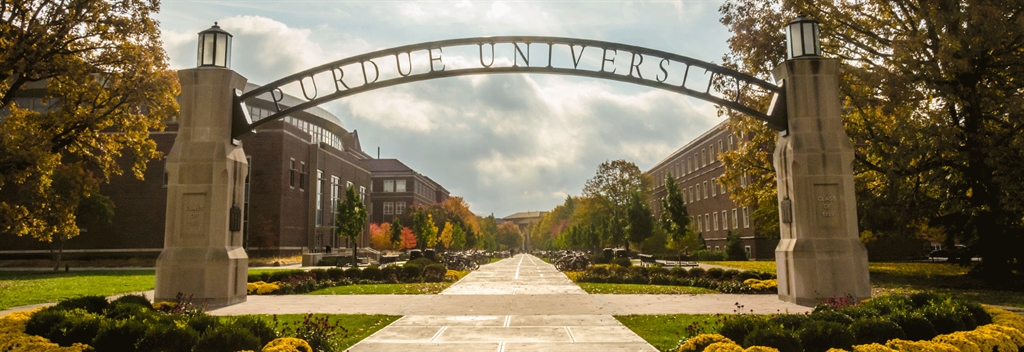
Despite those concerns, Daniels assumed the university presidency in 2012. That he had appointed eight of the university’s ten trustees and had reappointed the other two was deemed not to constitute a conflict of interest. Because that conclusion was so obviously dubious on its face, Daniels committed to avoiding political associations that were not very directly related to his position with the university. There is manifold evidence that he has not adhered to that promise. Not surprisingly, he has essentially given lip service to shared governance, demonstrating that he is much more interested in photo ops than in meaningful faculty input. He has also kept costs down, exhibiting the same penchant for abrupt budget reductions that gained him national attention as governor. The university’s regional campuses have been particularly hard hit by these reductions, but Daniels’ own compensation has not at all been constrained by them. When he assumed the presidency, Daniels made a point of asking for a salary significantly less than that of his predecessor and for a significant portion of any salary increases to be linked directly to his performance reviews. But, of course, those reviews would be conducted by trustees whom he himself had appointed or reappointed, and between 2012 and 2019, his salary increased from $420,000 to $902,000.
In an action that recalled his outsourcing of welfare enrollment to IBM, in 2016 Daniels outsourced the university’s textbook sales to Amazon, but history also repeated itself when the agreement was dissolved just two years later because such an abrupt transition was bound to create many more problems than it resolved. Not at all surprisingly, under Daniels’ leadership, Purdue has also introduced some competency-based programs. And, in perhaps the most controversial initiative of his presidency, the university purchased the online for-profit Kaplan University and rebranded the entity declared by the DoE to be a “predatory institution” as Purdue Global. Thus far, this initiative has been more of a revenue drain than a revenue producer, but proponents of Purdue Global claim—in the standard for-profit mode of deflecting concerns about graduation rates and debt loads—that profitability is just around the corner. But, even if Purdue Global does become profitable, until it is demonstrated that its academic standards are aligned with Purdue’s long-established standards and are not at all reminiscent of Kaplan’s very dubious standards, the many faculty critics and other critics of this acquisition will ultimately be proven right about the significant damage being done to Purdue’s academic reputation and institutional standing.