AAUP Ohio Conference

American Association of University Professors

  • About
    • Who We Are
    • Board of Trustees
    • Staff
    • Committees
    • Events
      • Annual Meeting
      • Board Meetings
  • Membership
    • Chapters & Presidents
    • Join AAUP
  • Government Relations
    • Current Legislation
    • Find Your Legislators
    • SB 1 Toolkit
  • News & Blog
  • Donate

Dec 04 2017

Wright State Faculty Overwhelmingly Sign Pledge to Reject Any Unfair Contract

More than 82% of the teaching faculty at Wright State University who are members of the American Association of University Professors (AAUP) have signed a pledge to reject any contract that further penalizes faculty for the gross mismanagement of the university.

According to Marty Kich, the President of AAUP-WSU, “Over the last two years, the university has eliminated more than ten percent of its teaching faculty through attrition. Worse, the Board and administration now seem to want to gut the faculty contract to allow for further, rapid reductions in the number of teaching faculty simply to meet immediate budget targets. They seem very willing to ignore the longer-term consequences of having dramatically fewer full-time faculty–less expertise and fewer and larger classes. That’s not the ‘fix’ WSU needs.”

Kich added, “ We are concerned that quality of instruction will be compromised in order to sustain a variety of schemes that were supposed to produce additional revenue streams for the university but have instead, without exception, cost the university tens of millions of dollars.”

It is rare for a public university of Wright State’s size to run even a single year of negative cash flow, never mind four or five consecutive years of negative cash flow. Over those years, the Wright State administration, with the approval of the Board of Trustees, ran through more than $100 million in reserves.

It is important to note that over that half-decade, enrollment at the university was stable, around 17,500 students, give or take 100-200 students in a given year. Likewise, over that half decade, the total salary and benefits of teaching faculty at the university did not amount to more than 17 ½ percent of the university’s budget. To put that in more immediate, pocket-book terms, only 17 ½ cents out of each dollar of tuition go to the full-time faculty engaged in teaching students.

The point of the pledge to signal to the fact-finder and the Board that the faculty will not accept any contract that involves making even deeper cuts to instruction. Additional cuts to instruction will compromise the quality of education being offered to students and may undermine the university’s main sources of revenue.

Kich observed: “Over the past half-decade, when the leadership of AAUP-WSU repeatedly expressed concerns about Wright State’s profligate over-spending, our concerns were dismissed as if we were simply being alarmists or habitually critical. A university administration that ignores meaningful faculty input on things as basic as its budget ends up where Wright State has now found itself—trying to eliminate in a year or two a problem that was created through more than half a decade of irresponsible management. If carried far enough, that approach can very easily end up making the problems much worse.”

More than 85% of the teaching faculty represented by AAUP at Wright State are AAUP members. That percentage is the highest of any university in the state of Ohio.

Written by admin · Categorized: Uncategorized

Nov 28 2017

Call for Nominations; Education First Report Highlight

Nominations Open for President, Secretary, At-Large Position

We are now seeking nominations for the 2018 Ohio Conference AAUP Board of Trustees’ elections. In accordance with our governing document, you must have been a member for at least two years and current on your dues to be eligible for a trustee position.

Nominations should be sent to Sara Kilpatrick, Executive Director, at sara@ocaaup.org no later than January 30, 2018. 

Below is the list of positions to be elected directly through the Conference elections this year. Those who are elected will serve a two-year term beginning September 1, 2018.

  • President
  • Secretary
  • At-Large Member: Private Institution (nominee must be a member of a private institution)

The President shall preside at Conference meetings and, with the approval of the Trustees, arrange for the Conference meetings and appoint Chairs of the standing committees; shall execute such matters as are referred to him or her at Conference meetings and by the Trustees; and, in consultation with the Trustees, shall take such other actions as are judged necessary to carry out the objectives of the Ohio Conference, and shall report at the next Conference meeting any actions taken by the Trustees during the time between meetings. The President shall serve as delegate to the Annual National AAUP meeting and to the Annual meeting of the Assembly of State Conferences.

The Secretary shall keep the Ohio Conference records, including minutes of meetings of the Trustees and of the Conference. The Secretary shall serve as a delegate to the Annual meeting of the Assembly of State Conferences.

The Conference has four Saturday Board meetings in Columbus each academic year that trustees are expected to attend, one of which is the Annual Meeting. They also oversee the executive director and provide direction for the organization.

Serving on the Board of Trustees is a rewarding way to engage in statewide AAUP issues and state government advocacy. If you have any questions, contact Sara Kilpatrick at sara@ocaaup.org. 

Education First Report Highlight: State Funding

The greatest challenge that Ohio colleges and universities have faced is inadequate funding from the state. State funding has directly caused tuition increases, faculty lay-offs, decrease in student support services, and many other problems.

In our report, Education First, we point out that Ohio ranks in the bottom third for adults with degrees, even though Ohio ranks fifth in number of higher education institutions. Lack of affordability is preventing students from earning degrees. We showed that in the last fiscal year, the state spent less on State Share of Instruction (SSI) than it spent six years ago under Gov. Strickland’s last budget.

Recently, the Center on Policy and Budget Priorities released a report showing that, when adjusted for inflation, State Share of Instruction funding and per student funding have declined significantly since 2008 (-13% and -15.2%, respectively), as can be seen in the graphs below.

In our report, we also addressed the new “performance-based” university funding formula that was adopted four years ago. Whereas state funding used to be based on enrollment, the state radically changed the funding model to one mostly based on course completions and graduations. This model favors selective institutions like Miami and Ohio State, who have more students who will be academically successful, while harming open-access institutions and the students they serve.

Researchers at Columbia University, who studied the impact of the new funding formula in Ohio in 2015, found that the state’s universities were moving resources from financially-needy students to merit students who were more likely to pass classes and graduate and thus generate financial return. 

Unfortunately, the new funding formula remains, and in the recently-passed state budget, higher education funding will remain flat in the current and next fiscal years. This highlights the importance of electing policymakers who value higher education and understand that the state cannot tax cut its way to success — we must have fair and responsible taxation and budgeting policies that ensure the state has revenue to invest in things like public higher education.

Written by admin · Categorized: Uncategorized

Oct 12 2017

OCAAUP testifies against tenure-related bill

Study committee should focus on real problems in higher ed

On Wednesday, October 11, Steve Mockabee delivered testimony on behalf of OCAAUP in opposition to Substitute House Bill 66. Mockabee is chair of OCAAUP’s government relations committee and is an Associate Professor of Political Science at the University of Cincinnati.

HB 66 began as legislation that would have required a minimum teaching load of one, three-hour undergraduate course per semester for every tenured university professor. After hearing overwhelming opposition from stakeholders, the bill’s sponsor, Rep. Ron Young (R-Leroy Twp.), introduced a substitute bill that instead would create a study committee.

The study committee would be charged with “evaluating each university’s commitment to the undergraduate mission, including, but not limited to its efforts to ensure tenured faculty members participate in the undergraduate mission through face-to-face interaction with undergraduate students.”

While the substitute bill is a vast improvement from the original version, Mockabee pointed out in his testimony that there is an underlying assumption that tenured faculty do not teach enough, when the real problem is that institutions do not have enough tenured faculty, or full-time faculty in general.

Prof. Mockabee noted that universities, on average, spend just 24% of their budgets employing faculty, and institutions have opted to hire armies of adjuncts in the face of inadequate state support and tuition and fee freezes. He went on to present data from our latest higher education report, Education First, about how little it would cost to convert adjunct positions to more full-time positions.

“At some point, the realization must be made that we get what we pay for. Our institutions of higher education have been holding the line with tuition and fee freezes, and without sufficient financial support from the state to make up for inflationary increases alone. But that obviously cannot continue forever,” he stated.

Wrapping up the testimony, Mockabee recommended several amendments to improve the study committee’s composition and mission, including an ask for the committee to evaluate the breakdown of faculty at universities and make recommendations for increasing the number of full-time tenured faculty.

He also requested that representatives from the Ohio Faculty Council (OFC) — the body that represents four-year institution faculty — be appointed to the committee. An amendment was added during the committee to appoint one member from OFC to the proposed study committee.

Chair of the House Higher Education and Workforce Development Committee, Rep. Mike Duffey (R-Worthington), thanked Mockabee for the testimony calling it “insightful and interesting.” He asked him whether more adjuncts have been brought in because there is more student demand for higher education, or whether they’re being used to save money.

Prof. Mockabee responded that it is likely a function of both, but more so that adjuncts have been used as a cost-savings measure. “Quality is at stake when undergraduate students can’t meet with their professors because they don’t even have an office to hold office hours, and they’re traveling between three or four campuses trying to eek out a living.”

Duffey continued with a broad question about the need for tenure. Mockabee explained that tenure allows faculty to take on controversial subjects and take risks with research. Without it, faculty would fear losing their jobs for discussing unpopular views, and likely would avoid risky research that might not pan out the way it was envisioned, he explained.

Other opponent testimony was given by two University of Toledo faculty and can be viewed on the House Higher Education and Workforce Development Committee website under October 11. Sub. HB 66 likely will be scheduled for interested party testimony in the near future, after which the committee may choose to vote on the bill. We will continue to keep you apprised.

Written by admin · Categorized: Uncategorized

Aug 09 2017

NCAA expert Ridpath will headline Annual Meeting

OCAAUP Annual Meeting: Nov. 3-4-4

NCAA expert B. David Ridpath to give keynote address

The 67th Ohio Conference AAUP Annual Meeting will be held at the Renaissance Columbus Downtown Hotel on November 3-4, 2017.

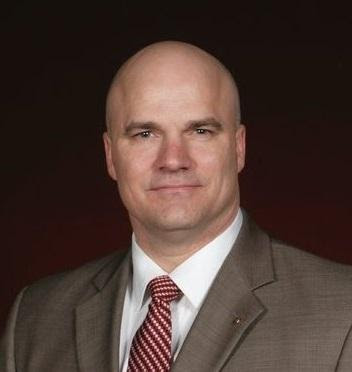
B. David Ridpath (pictured), NCAA expert and professor of sports administration at Ohio University, will deliver the keynote luncheon address on Saturday, November 4: “Shaping Policy and Practice in Intercollegiate Athletics: A Study of Student Fee Resource Allocation for Athletics and its Effect on Access and Affordability of Higher Education.”

In addition, speakers from “UnKoch My Campus” will give a workshop that Saturday afternoon: “Pushing Back on the Power of Private Donors: Strategies for Building Your Chapter & Protecting the Academy.”

UnKoch My Campus is an organization founded by students and activists that exposes the influence of the Koch Brothers in donating money to institutions of higher education in order to push their own agenda and economic interests. UnKoch My Campus’ presentation will highlight Ohio colleges and universities and offer suggestions for ensuring transparency, accountability, and academic integrity at your own campus.

Moreover, members who are able to attend the Friday reception and dinner will have the opportunity to meet State Representative Kathleen Clyde (D-Kent), who is running for Ohio Secretary of State.

The preliminary agenda is available here.

We hope you’ll join us in Columbus for an informative event. It is a great opportunity to network with faculty from around the state. Registration costs just $25. Click here to register.

Education First Report Highlight: Athletic Subsidy

All but one Ohio university heavily subsidizes athletics

In our next few e-mails, we will be highlighting sections of our latest Ohio Higher Education Report: Education First.

To begin, we will focus on an issue that we find catches many by surprise, and is appropriate for this e-mail given the above-mentioned guest speaker and topic at our Annual Meeting: the subsidizing of university athletics.

Only Ohio State University has a self-sustaining athletics’ departments; in fact, OSU makes a profit on athletics each year, mostly on account of its men’s football program. But OSU is the anomaly. All other Ohio universities take heavily from the academic side of the institution to cover its deficit-running athletic programs. See the chart above. 

We hear frequently from university trustees, presidents, and other administrators that athletics is the “front porch” of the university. In other words, they justify athletic subsidy because they believe it promotes their institutions to the rest of the world. But we take issue with money being siphoned from the academic side at a time of increasingly scarce resources and massive student debt.

If academic departments have to live within their means, why shouldn’t athletics?

Read more about this issue in our report.

Written by admin · Categorized: Uncategorized

Jul 07 2017

Kasich’s Tuition-Related Vetoes Stand

Colleges and universities will be limited on tuition increases

We last reported to you that Gov. Kasich had signed HB 49, the biennial budget bill. The governor has the ability to line-item veto pieces of the budget bill. It was widely expected that he would veto the “Medicaid freeze,” which he did, but it was not expected that he would veto any pieces related to higher education.

However, as more information trickled out, we discovered that Kasich vetoed two higher education provisions regarding tuition increases.

First, he vetoed the $10/credit hour increase that community colleges would have been allowed to implement for the 2017-18 academic year. Community colleges can implement that increase for 2018-19, though. 

Moreover, Kasich vetoed the provision that would have allowed universities to increase tuition by 8%, if they offer a four-year tuition guarantee. Universities still have the ability to increase tuition by 6%, if they offer a tuition guarantee, which amounts to roughly 1.5% increases each year.

The Ohio House of Representatives returned to Columbus on Thursday, July 6 to override 11 of Kasich’s vetoes, but decided not to override the vetoes of the aforementioned tuition provisions. 

Our community colleges and universities will continue to be squeezed by lack of state support and the inability to raise tuition. While we believe that institutions need to show greater restraint in regards to administrative spending, athletic expenditures, and grandiose construction projects, students are short-changed by the state’s refusal to invest in their education. 

The Ohio Conference will continue to advocate for the need for greater funding to our higher education system, as well as necessary reforms at the state and institutional levels. We put much of this forward in our latest Ohio Higher Education Report: Education First.

Written by admin · Categorized: Uncategorized

  • « Previous Page
  • 1
  • 2
  • 3
  • 4
  • 5
  • 6
  • …
  • 16
  • Next Page »
AAUP Ohio Conference, 222 East Town Street, 2W, Columbus, OH 43215