AAUP Ohio Conference

American Association of University Professors

  • About
    • Who We Are
    • Board of Trustees
    • Staff
    • Committees
    • Events
      • Annual Meeting
      • Board Meetings
  • Membership
    • Chapters & Presidents
    • Join AAUP
  • Government Relations
    • Current Legislation
    • Find Your Legislators
    • SB 1 Toolkit
  • News & Blog
  • Donate

Apr 17 2019

Statehouse News: McNay, Voigt Testify on Budget, Free Speech

HB 166: State Budget Bill
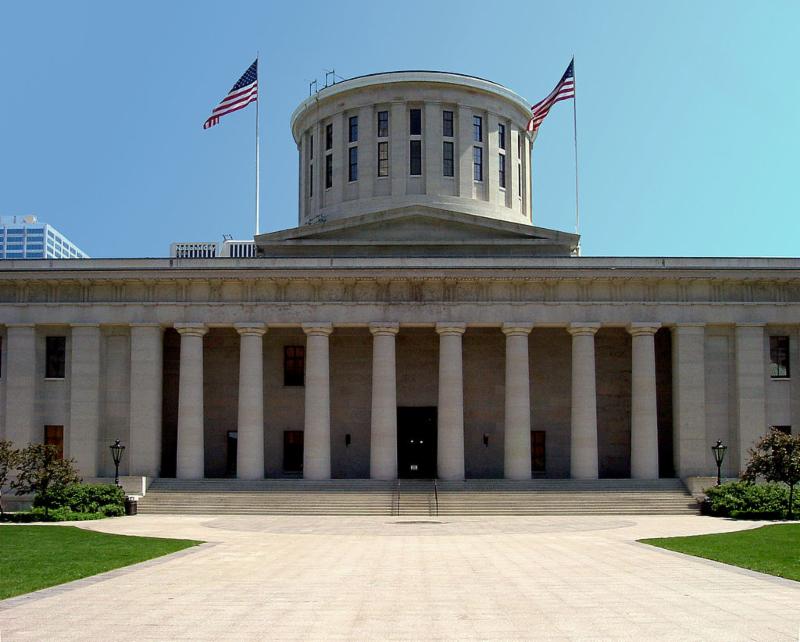
Last Thursday, April 11, OCAAUP President John McNay testified to the Ohio House Finance Subcommittee on Higher Education on House Bill 166, the biennial state budget bill.

In his testimony, McNay advocated for greater State Share of Instruction funding, encouraging the committee members to seek new revenue, if need be, in order to accomplish that. He applauded the infusion of money to the need-based Ohio College Opportunity Grant, but advised that the state still can — and should — do better.

In addition, McNay called attention to issues with College Credit Plus and the focus on “time to degree” as a cost-savings model. He also said institutions need to be more transparent with their budgets, since too much money is being spent on things peripheral to the academic mission.

Moreover, he suggested that the Ohio Department of Higher Education (ODHE) needs to have greater oversight of university leadership, since several of Ohio’s institutions have been mismanaged badly.

McNay pointed to this language in the budget regarding faculty workload, which we brought to your attention last week:

The boards of trustees of state institutions of higher education shall ensure that faculty members devote a proper and judicious part of their work week to the actual instruction of students. Total class credit hours of production per academic term per full-time faculty member is expected to meet the standards set forth in the budget data submitted by the Chancellor of Higher Education.

ODHE reached out to us last week to let us know that this language merely carried over from previous budget bills and has no discernible impact, so McNay asked the committee to remove the language to avoid further confusion.


HB 88: FORUM Act / “Campus Free Speech”

Last Tuesday, April 9, Ohio State professor and OCAAUP member Lisa Voigt testified on House Bill 88, the “Forming Open and Robust University Minds” or FORUM Act, also called the “Campus Free Speech” bill.

Calling the bill unnecessary, Voigt stated in her testimony that the First Amendment already protects free speech at our colleges and universities, and that, while the AAUP shares the belief that no idea should be banned on campus, there is a difference between forbidding an idea and hosting a controversial speaker that could require heavy security.

Voigt also warned that, should this bill become law, it would lead to more bureaucracy and administration at our institutions.

We plan to testify against SB 40, which is the companion bill to HB 88 in the Ohio Senate, when that opportunity arises.

Many thanks to Professors McNay and Voigt for representing faculty in our state capital to relay the AAUP’s concerns and positions.


Action Alert: Campus “Free Speech” Bills

If you haven’t already, please send messages to your state legislators asking them to reject these so-called “campus free speech” bills. More information and a link to easily contact your representative and senator below.

House Bill 88 and Senate Bill 40, both known as the “Forming Open and Robust University Minds” or FORUM Act are taken straight from the American Legislative Exchange Council (ALEC) and Goldwater Institute model legislation playbooks.

Both bills would prohibit colleges and universities from having free speech zones, as well as force institutions to host any speaker that is invited to campus. It would allow anyone from the campus community or an invited speaker to sue the university for up to a year after what they feel was a free speech violation.

In addition, these bills would require institutions to widely publish free speech policies, make them part of student orientations, and make institutions report to the state the enforcement of these provisions and any violations of them.

HB 88 also would require institutions to adopt the following definition of “harassment:”

1. Conduct by an employee that requires an individual to submit to unwelcome activity in order to receive aid, benefit, or service; or

2. Unwelcome conduct that is so severe, pervasive, and objectively offensive that it effectively denies an individual equal access to the individual’s education program or activity.

As we expressed in letters to members of the committees hearing these bills, the legislation is not necessary, as our institutions of higher education have done well balancing First Amendment interests with the safety and welfare of the campus community.

In addition, we believe these bills could make our institutions even more likely to become involved in highly politicized controversies, and are potentially very costly–neither of which is what our students and the taxpayers can possibly want our institutions to be distracted by or expending resources on.

Click here to send a message to your representative and senator expressing opposition to these bills.


Summer AAUP Conferences

The National AAUP has two important events this summer: the Annual Conference and Summer Institute.

The Annual Conference is being held in Crystal City (just outside of Washington, DC) from June 12 through June 16. National AAUP is proposing major restructuring changes that will need to be approved by the membership.

In addition, this year’s Summer Institute — a series of workshops and trainings designed to empower faculty — will be held at Roosevelt University in Chicago from July 25 to July 28. A limited number of scholarships are being offered by OCAAUP to cover the registration (which includes lodging and most meals) and travel expenses. If you are interested in a scholarship, please e-mail sara@ocaaup.org.

Written by admin · Categorized: Uncategorized

Mar 28 2019

State Budget News; Athletic Subsidies; Election Results; Support WSU Faculty

Higher Ed Gets Slight Boosts in Biennial Budget

On March 15, Gov. Mike DeWine unveiled his executive budget for the biennium, Fiscal Years 2020-21, but the formal budget bill — House Bill 166 — was just introduced on March 25.

In terms of funding, higher education will get a couple of boosts. State Share of Instruction (SSI) — the main funding stream to public colleges and universities — will receive a 1.1% increase in FY 2020 and an additional 1% in FY 2021, which amounts to roughly $42 million over the two-year period.

In addition, the need-based Ohio College Opportunity Grant (OCOG) will get 21.2% increases each fiscal year, amounting to a $47 million boost over the biennium. This is a much-needed infusion of money to this important program, which helps lower-income students attend public and private institutions in the state. There also is discussion about using OCOG funds to help community college students purchase textbooks. Currently, community college students are ineligible for OCOG.

Of course, we know that these additional funds are insufficient in truly moving toward a more affordable and accessible system of higher education that supports quality instruction and doesn’t leave our students saddled with debt.

To make up for minimal funding increases, DeWine will allow institutions to increase tuition by 6%, if they offer a “tuition guarantee.” A tuition guarantee lets them raise tuition initially, but requires them to keep it consistent for the four years of a student’s college career. However, language in the budget will allow institutions to appeal to the chancellor to increase tuition beyond 6%, if they can demonstrate a financial need. Unless offering a tuition guarantee, institutions will be restricted from increasing instructional and other fees.

Moreover, the governor and chancellor are pushing for graduates’ job placements to be incorporated into the SSI formula. There will be a study conducted by the chancellor and appointees from the Inter-University Council and Ohio Association of Community Colleges. The “Employment Metrics Consultation,” as they’re calling the committee, will be charged with completing a study by June 30, 2020, with expectations of implementing this new piece to the SSI formula for Fiscal Year 2022 (in the next budget).

Part of the governor’s plans to increase the number of certificate and degree holders is to push “micro-degrees.” The state would fund these micro-degrees for at least 10,000 Ohioans a year at a cost of $15 million each year. The administration has described micro-degrees as low-cost, industry credentials that typically take less than a year to finish.

We will continue to monitor the state budget bill and will offer testimony to the Higher Education Subcommittees when those opportunities arise. We will provide more details and analysis as the process unfolds.


Collegiate Athletic Spending in the Spotlight

Most Ohio students probably have no idea that much of their student fee, and even some of their tuition dollars, is being spent to subsidize their university’s athletic program.

Rich Exner of the Cleveland Plain Dealer recently reported on athletic subsidies at Ohio’s universities, save Ohio State, which is the only institution in the state with a self-sustaining athletic program.
As can be seen in the graph below, Ohio’s universities are spending more and more each year on athletics and the cost to subsidize these deficit-running programs.

The graph below illustrates the cost per student each year to subsidize sports, ranging from the low end of $717 at Wright State to $1,359 at Akron. Multiply these figures by four years (if students are able to graduate in four years), and tack on student loan interest, and these already large figures balloon.

Sports teams are enjoyable, and we support our student athletes, but when institutions are siphoning money away from academic programs and tuition support for sports palaces and expensive coaches, administrations need to reassess their priorities.


2019 OCAAUP Election Results

Thank you for taking the time to vote in our recent elections.

Congratulations to Marty Kich (Wright State), Cathy Wagner (Miami), and Mitch Eismont (Central State) for being elected to the positions of Vice President, Treasurer, and At-Large Representative, respectively.


Support Wright State Faculty

In January 2019, hundreds of Wright State faculty members went on strike not for higher wages, but to protect the core educational mission. After 20 days–one of the longest strikes in the history of higher education–they won the strike, but at a cost. Strikers lost 7.2% of their annual salaries. Any funds raised will be equally distributed among all striking faculty members, up to their total gross pay lost for striking. Your support will keep our best educators in the classroom, rather than working extra jobs with less time to help their students.

Visit their GoFundMe page to donate today!

Written by admin · Categorized: Uncategorized

Mar 25 2019

Higher Ed Gets Slight Boosts in Biennial Budget

On March 15, Gov. Mike DeWine unveiled his executive budget for the biennium, Fiscal Years 2020-21, but the formal budget bill — House Bill 166 — was just introduced on March 25.

In terms of funding, higher education will get a couple of boosts. State Share of Instruction (SSI) — the main funding stream to public colleges and universities — will receive a 1.1% increase in FY 2020 and an additional 1% in FY 2021, which amounts to roughly $42 million over the two-year period.

In addition, the need-based Ohio College Opportunity Grant (OCOG) will get 21.2% increases each fiscal year, amounting to a $47 million boost over the biennium. This is a much-needed infusion of money to this important program, which helps lower-income students attend public and private institutions in the state. There also is discussion about using OCOG funds to help community college students purchase textbooks. Currently, community college students are ineligible for OCOG.

Of course, we know that these additional funds are insufficient in truly moving toward a more affordable and accessible system of higher education that supports quality instruction and doesn’t leave our students saddled with debt.

To make up for minimal funding increases, DeWine will allow institutions to increase tuition by 6%, if they offer a “tuition guarantee.” A tuition guarantee lets them raise tuition initially, but requires them to keep it consistent for the four years of a student’s college career. However, language in the budget will allow institutions to appeal to the chancellor to increase tuition beyond 6%, if they can demonstrate a financial need. Unless offering a tuition guarantee, institutions will be restricted from increasing instructional and other fees.

Moreover, the governor and chancellor are pushing for graduates’ job placements to be incorporated into the SSI formula. There will be a study conducted by the chancellor and appointees from the Inter-University Council and Ohio Association of Community Colleges. The “Employment Metrics Consultation,” as they’re calling the committee, will be charged with completing a study by June 30, 2020, with expectations of implementing this new piece to the SSI formula for Fiscal Year 2022 (in the next budget).

Part of the governor’s plans to increase the number of certificate and degree holders is to push “micro-degrees.” The state would fund these micro-degrees for at least 10,000 Ohioans a year at a cost of $15 million each year. The administration has described micro-degrees as low-cost, industry credentials that typically take less than a year to finish.

We will continue to monitor the state budget bill and will offer testimony to the Higher Education Subcommittees when those opportunities arise. We will provide more details and analysis as the process unfolds.

Written by admin · Categorized: Uncategorized

Feb 11 2019

Deal reached at Wright State; House Committee Assignments; Announcement of Candidates

Deal Reached at Wright State

Late Sunday evening, our Wright State University chapter announced that after a 20-day strike — the second longest at an institution of higher education in U.S. history — they had reached a tentative agreement with the administration and would return to work on Monday morning.

This was no small feat, as they faced a recalcitrant administration and board of trustees who seemed intent on busting the union. The strike followed two years of negotiations and a board-imposed contract that, among other things, eliminated workload agreements and any meaningful bargaining over healthcare.

We cannot thank enough our steadfast Wright State members, supportive Wright State students, and allied AAUP members and union brethren across the state for their solidarity. It is because of our collective strength that this difficult endeavor has been brought to a resolution.

This situation highlights big problems that we continue to face in Ohio higher education: boards and administrations that recklessly spend money on pet projects rather than focus resources on instruction; institutions — particularly open-access institutions — that struggle due to lack of state funding; and a need for more trustees with educational, nonprofit, and/or labor backgrounds who prioritize the educational mission and can negotiate in good faith with campus unions.

Congratulations, Wright State faculty and Wright State University! We hope this is the start of better days.


House Higher Ed Committee Assignments

The Ohio House of Representatives announced committee assignments late last week. The all-important Finance Committee holds special weight, as it will oversee the state budget process, which will begin soon.

Of special importance to us is the Finance Subcommittee on Higher Education, which will hear all higher ed-related testimony and make recommendations to the full Finance Committee. Because there is no link to the subcommittee yet, here is the list of committee members:

Rick Carfagna (R-Genoa Twp), ChairJay Edwards (R-Nelsonville)Rick Perales (R-Beavercreek)Bride Rose Sweeney (D-Cleveland), Ranking Democratic MemberAdam Miller (D-Columbus)
In addition, the Higher Education Standing Committee, which was created for the first time during the last General Assembly will continue its existence.

Senate committee assignments should be available in the near future. As always, we will update our members on the budget process and other higher education bills of relevance to us. Stay tuned.


Announcement of Candidates for 2019 Elections

We are pleased to announce the following candidates for the 2019 OCAAUP elections:

-Vice President: Marty Kich (Wright State University)-Treasurer: Cathy Wagner (Miami University)-At-Large Member from a public institution with less than 100 members or a private institution: Mitchell Eismont (Central State University)

Thank you to our three candidates for their willingness to serve the Ohio Conference.

Electronic ballots will be sent to all members in March.

Written by admin · Categorized: Uncategorized

Jan 05 2019

HB 66 Passes; IO Report; Last Call for Nominations

HB 66 Passes, Signed by Kasich

During the final days of the Ohio General Assembly’s “lame duck” legislative session, the Senate passed an amended version of House Bill 66, the House concurred on the changes, and Gov. Kasich signed the bill into law.
Initially, HB 66 was legislation that would have required a minimum teaching load for all tenured faculty at Ohio’s public universities. After significant push back, the bill was modified heavily to instead create the “Undergraduate Mission Study Committee,” as the original bill purportedly was aimed at ensuring that undergraduates were learning from tenured professors.

Because of the Ohio Conference AAUP’s efforts, the bill includes language that requires the committee to “Review…the faculty composition at each institution based on employment status, including tenured faculty, full-time tenure track faculty, full-time nontenure track faculty, and part-time faculty.” We believe it is important for legislators to understand the attrition that has occurred with tenure-track positions, and that we need more tenured faculty (and more full-time faculty in general) to teach undergraduates, rather than imposing a cumbersome minimum teaching load for all university tenured professors.

The committee will be comprised of the Ohio Department of Higher Education chancellor, the president of the Inter-University Council, a faculty member appointed by the House Speaker, a faculty member appointed by the Senate President, the chair of the Ohio Faculty Council, two chief academic officers, two students, and six legislators (three each from the House and Senate).

While we still are of the opinion that this committee is an unwise use of time and resources by our state government, it will be an opportunity to highlight the excellent work of Ohio faculty — tenured and not — and hopefully shed light on the real problems facing our institutions of higher education. We intend to follow the work of the committee and communicate our views to the faculty and legislative representatives.


Innovation Ohio Releases Higher Ed Report

Innovation Ohio (IO), a policy think tank based in Columbus, has issued a new report by fellow Stephen Dyer, entitled “The Heart of it All: How Ohio’s Lagging Investment in Post-Secondary Education Must Be Reversed For Its People to Prosper in Today’s Economy.”

A few key findings from the report:

1) Ohio’s investment in higher education has dropped by 25% over the last three decades. Need-based aid has also been cut. Both of these factors disproportionately impact college access for poor students in both urban and rural districts.

2) Fewer and fewer Ohioans today are earning more than their parents did a generation ago. While more and more jobs require a post-secondary credential, Ohioans continue to lag behind the rest of the country in obtaining them.

3) Socioeconomic status impacts not just enrollment, but also completion.Students from poor school districts are twice as likely to fail to complete their programs. A similar gap exists between suburban and rural districts.

Like IO, we believe — and the research shows — that investment in post-secondary education is crucial for ensuring Ohio cultivates and retains a strong, talented workforce that allows us to stay competitive in a fast-changing economy and provides equity in opportunity to Ohioans all across our state.

Over the coming months, the Ohio Conference AAUP will be partnering with the IO Education Fund to develop specific policy initiatives to help policymakers develop a better trained, more educated workforce, ensuring a prosperous future for all Ohioans.


Last Call for Nominations for 2019 Elections

In accordance with our Code of Regulations, this will serve as our call for nominations for the 2019 OCAAUP elections. The positions to be elected in 2019 are:

-Vice President-Treasurer-At-Large Member from a public institution with less than 100 members or a private institution

The Vice President serves in the absence of the President and serves as a delegate to the National AAUP Annual Meeting and the Assembly of State Conferences Annual Meeting. The Treasurer also serves as a delegate to the Assembly of State Conferences Annual Meeting and is responsible for overseeing the Conference’s finances.

To nominate yourself or another member, or if you have any questions, e-mailsara@ocaaup.org. Nominations are due by January 15, 2019.

Written by admin · Categorized: Uncategorized

  • 1
  • 2
  • 3
  • …
  • 16
  • Next Page »
AAUP Ohio Conference, 222 East Town Street, 2W, Columbus, OH 43215